Las Olas Isles Daily Life and the Bridge Clock
August 20, 2026
August 20, 2026
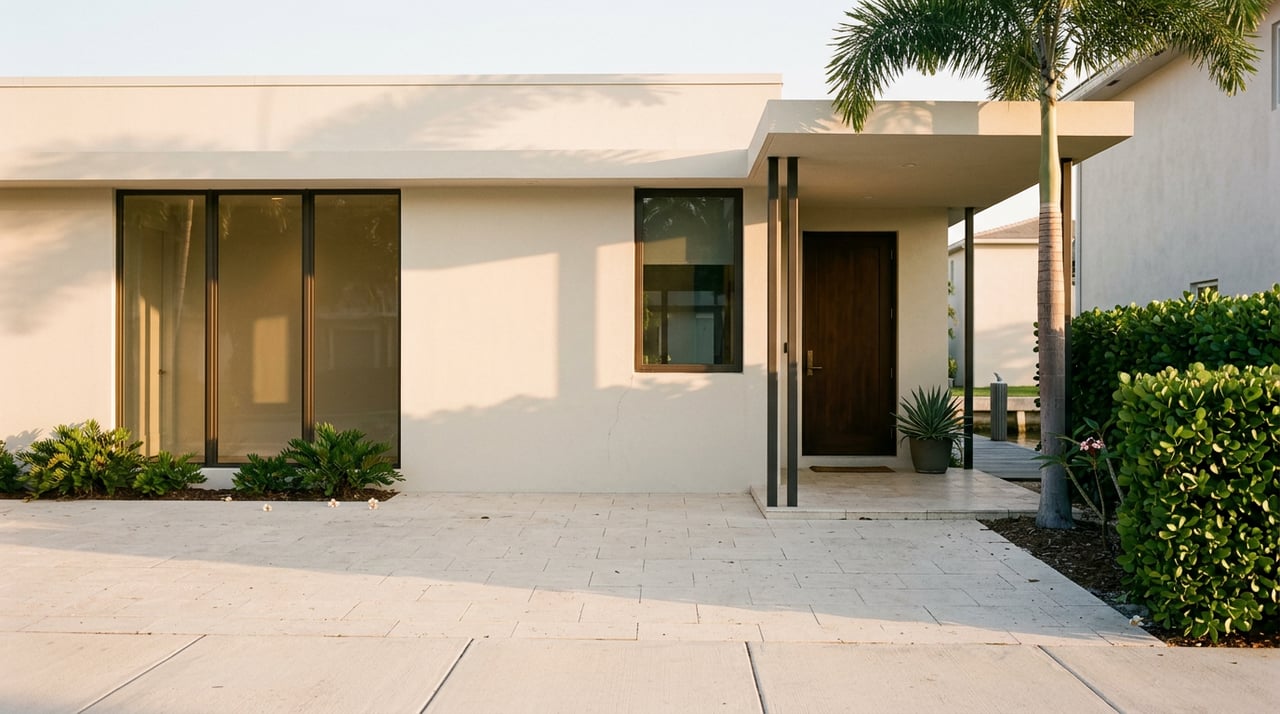
Stand on the seawall at the end of Hendricks Isle around a quarter to six on any weeknight and you will see it before you understand it. A center console idles at the mouth of the canal. A 45-footer sits behind it, engines low. Neither boat moves. Then, at the quarter hour, the bridge deck a few hundred yards east lifts, both boats fall into a loose line, and the canal empties out toward the Intracoastal in a way that looks almost choreographed. It is not choreography. It is a city ordinance most people who live here have never read.
The East Las Olas Boulevard Bridge opens on the quarter hour and the three-quarter hour, every hour, under a standing regulation from the City of Fort Lauderdale's bridge opening and closing rules. That single fact, buried in a public works document most residents will never open, is the real clock this neighborhood runs on. Not the tide. Not the weather. A city-mandated schedule that decides when you can leave your dock, when your dinner reservation actually needs to start, and when the sidewalk in front of your house on Isle of Venice or Royal Palm Isle fills up with people walking off a boat toward Las Olas Boulevard.
Most guides to this neighborhood describe it as a boater's paradise with deep water and no fixed bridges to the ocean. That is true and also the least interesting thing about living here. The interesting part is that the one bridge you do cross to get anywhere, land or water, opens on a fixed public schedule that has nothing to do with convenience and everything to do with regulation. Once you notice it, you stop planning your evening around vague instinct and start planning it around two numbers: fifteen and forty-five.
The isles that make up this stretch, Hendricks Isle, Isle of Venice, Royal Palm Isle, Nurmi Isles, Idlewyld, and the smaller finger streets like Lido Drive, San Marco Drive, Bontona Avenue, and Coral Way, all drain into canals that lead to the New River and out toward the Intracoastal. Every one of those routes crosses under, or waits behind, the same bridge deck on Las Olas Boulevard. A boat leaving a dock on Isle of Venice at 5:40 in the evening is not late. It is early for the 5:45 opening, which means five minutes of idling that regulars know to expect and newcomers usually don't.
The same clock runs walkers on the land side. Someone stepping off a boat at a dock behind their house and heading to the boulevard for dinner is, whether they realize it or not, timing their walk against a bridge that opened at the quarter hour and won't open again until the three-quarter. If your dinner reservation sits right on one of those marks, the sidewalk crossing the bridge fills with foot traffic timed to match. Miss that window and you are walking against a quieter street for fifteen minutes until the next batch of boats comes through.
There is one standing exception worth knowing if you are new here. The regulation carves out the first weekend in May, when the draw does not need to open between 4 and 6 p.m. on Saturday and Sunday, and does not need to open at all between 9:45 and 10:45 p.m. on the first Saturday. If you keep a boat here and haven't run into that exception yet, you will eventually, and it is worth marking on a calendar rather than discovering mid-transit.
The schedule only feels invisible until it breaks. It broke this month. On August 3rd, the East Las Olas Boulevard Bridge closed to traffic entirely for a rehabilitation project, with the closure running through August 5th and land traffic detoured to North Federal Highway and East Sunrise Boulevard. For two days, the quarter-hour rhythm that residents plan dinners and boat runs around simply stopped applying, and the detour signs told you exactly how much of daily life on the isles depends on a bridge deck most people never think about until it's gone.
This is not a one-time event. The bridge has needed emergency mechanical work before, and when it does, the city posts updates about single-leaf openings and wind restrictions rather than the clean quarter-hour cycle everyone is used to. If you live on the isles long enough, you learn to check the city's traffic advisories the way you'd check a marine forecast, not because the bridge fails often, but because when it does, it is the only variable that actually changes your evening.
The bridge is not the only piece of infrastructure on a schedule here. This summer, the city ran a stormwater improvement project on Isle of Venice Drive through the month of June, and a separate water main replacement project has been underway along Hendricks Isle. Neither project makes headlines the way a bridge closure does, but both follow the same pattern as the drawbridge: a fixed window of construction hours, a defined start and end date, and a temporary disruption to a street that residents otherwise think of as settled.
That pattern is not incidental. The isles sit low against saltwater canals, and the infrastructure that keeps water main breaks and tidal flooding in check runs on its own maintenance calendar the same way the bridge runs on its opening calendar. Residents who have lived here through a few of these projects tend to stop being surprised by orange cones on Hendricks Isle in early summer. It is close to routine.
The people who actually track that routine formed the Hendricks & Venice Isles Neighborhood Association, an organization that grew, by its own account, out of residents talking to each other on the sidewalk and realizing the two finger islands needed a single voice on drainage, seawall heights, and development compliance. Their stated priorities include monitoring new construction to make sure it accounts for high tides and storms, and pushing for seawall elevations that keep pace with rising water. That is not marketing language. It is a group of neighbors who noticed the same thing you notice at the seawall on a summer evening: the water here is not a backdrop. It is infrastructure you live with.
Once you understand that the neighborhood runs on two overlapping schedules, the bridge and the maintenance calendar behind it, the social calendar starts to make more sense too. Las Olas Oceanside Park hosts an outdoor market every Saturday from 9 a.m. to 5 p.m. and every Sunday from 10 a.m. to 5 p.m., plus Yoga on the Lawn most Saturdays at 9:30 a.m. from November through June. None of that requires planning around a bridge, since it sits east of the draw, but it gives residents on the isles a reason to walk the bridge in the other direction on a weekend morning, timed against the same quarter-hour rhythm as any evening boat run.
The fall calendar is worth marking now, in mid-August, while it is still just names and dates rather than a crowded weekend. The first-ever Las Olas Autumn Festival runs Saturday, October 3rd, from 10 a.m. to 2 p.m., free to attend. Two weeks later, the 39th Annual Las Olas Art Fair takes over the boulevard on October 17th and 18th, a juried event that has been running long enough to be a fixture rather than a novelty. Restaurants along the boulevard are also running Dine Out Lauderdale prix fixe menus this season, which is the kind of detail that matters if you are timing a dinner walk across that same bridge before the fall crowds arrive.
None of these events require a car, a reservation months out, or a plan that starts anywhere but your own dock or front door. That is the actual case for living on the isles, made not through a list of amenities but through the fact that the neighborhood's rhythm, water and land both, is legible if you know where to look. The bridge tells you when to leave. The maintenance calendar tells you when construction ends. The fall calendar tells you what's worth walking across the bridge for.
Most evenings, that walk ends somewhere ordinary. A stop at Ann's Florist on the way back from dinner, a slow lap along the seawall before heading in, a boat easing back up the canal after the fifteen-minute mark. None of it looks like anything from the outside. From the inside, once you've lived here long enough to feel the bridge cycle without checking a clock, it is the whole neighborhood in miniature: a fixed public schedule, a private dock, and a short walk that only works if you know when the bridge opens.
If you are weighing a move to the isles, or already live here and want a second opinion on how a specific dock, seawall, or waterfront property fits into that rhythm, Jaime Cristancho has spent years working this stretch of Fort Lauderdale and is glad to talk through what you are looking at. Schedule a consultation when you are ready.
Stay up to date on the latest real estate trends.

Embark on a seamless real estate journey with Jaime Cristancho. From initial consultation to closing, we’re here to listen, guide, and help you achieve success in every step of your South Florida property journey.
1209 E LAS OLAS BLVD FORT LAUDERDALE FL 33301