How Poinsettia Heights Spends a Saturday Now That Thrive Art District Is Open
August 13, 2026
August 13, 2026
Take the dog out early enough on a Saturday in Poinsettia Heights and you will end up on the boardwalk at Colohatchee Park, watching an iguana do absolutely nothing on a mangrove root while the South Fork of the Middle River moves past underneath. It is a good five minutes before you notice the sign that says you are standing in Wilton Manors, not Fort Lauderdale. The park most residents on 15th through 20th Avenue think of as their own backyard belongs, on paper, to the city next door.
That small detail turns out to be the key to how this neighborhood actually works. Poinsettia Heights has spent almost forty years making sure nothing changes on its interior streets. Everything that gives a weekend here its shape, the dog park, the new art walk two neighborhoods over, even the coffee shop regulars swear by, sits just past a boundary line the neighborhood itself drew to keep change out.
Colohatchee Park sits at 1975 NE 15th Avenue, an address that puts it inside Wilton Manors even though the Middle River it sits on is the same river that forms Poinsettia Heights' northern edge. The park covers 8.5 acres, 7 of them mangrove preserve, with an elevated walkway that carries you over the wetland to a pavilion, an outdoor fitness area, and the dog park at the back. That dog park isn't a wander-in situation. Since April 2019, entry has required a permit and a key fob, which means the regulars you see there most mornings have all filled out the same paperwork with a city that isn't technically theirs.
None of this makes the park feel any less like part of the neighborhood. It just means the thing residents rely on most for a quiet morning was never something Poinsettia Heights had to build, zone, or maintain itself. Somebody else did the work, on the other side of a river that happens to double as a property line.
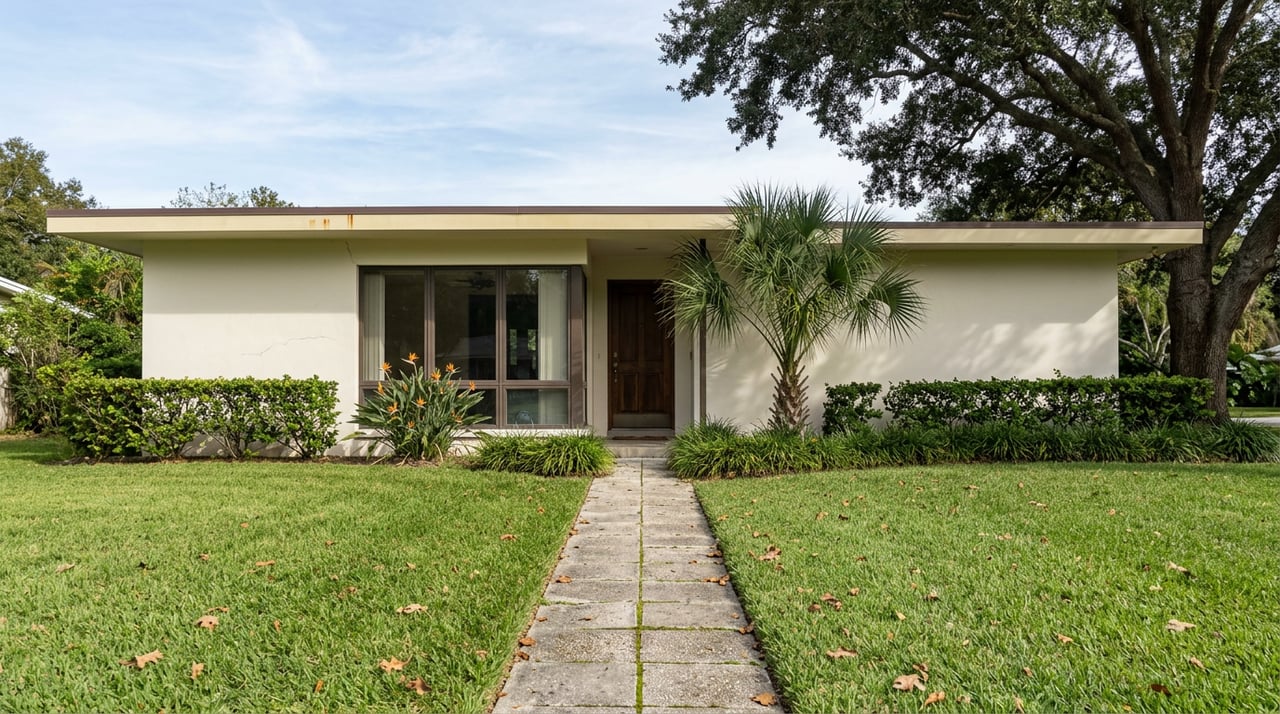
Walk the interior blocks and you can see why nothing like Colohatchee ever got built inside the neighborhood's own borders. The original homes here went up right after World War II as a development called North Ridge, built by Gill Construction Company through the late 1940s and early 1950s. By the 1980s, condos and townhomes were creeping in from the edges, and residents organized to stop it. The civic association that formed in response pushed through a rezoning that restricted the interior to single-family homes only, allowing multifamily construction along the two main thoroughfares and nowhere else.
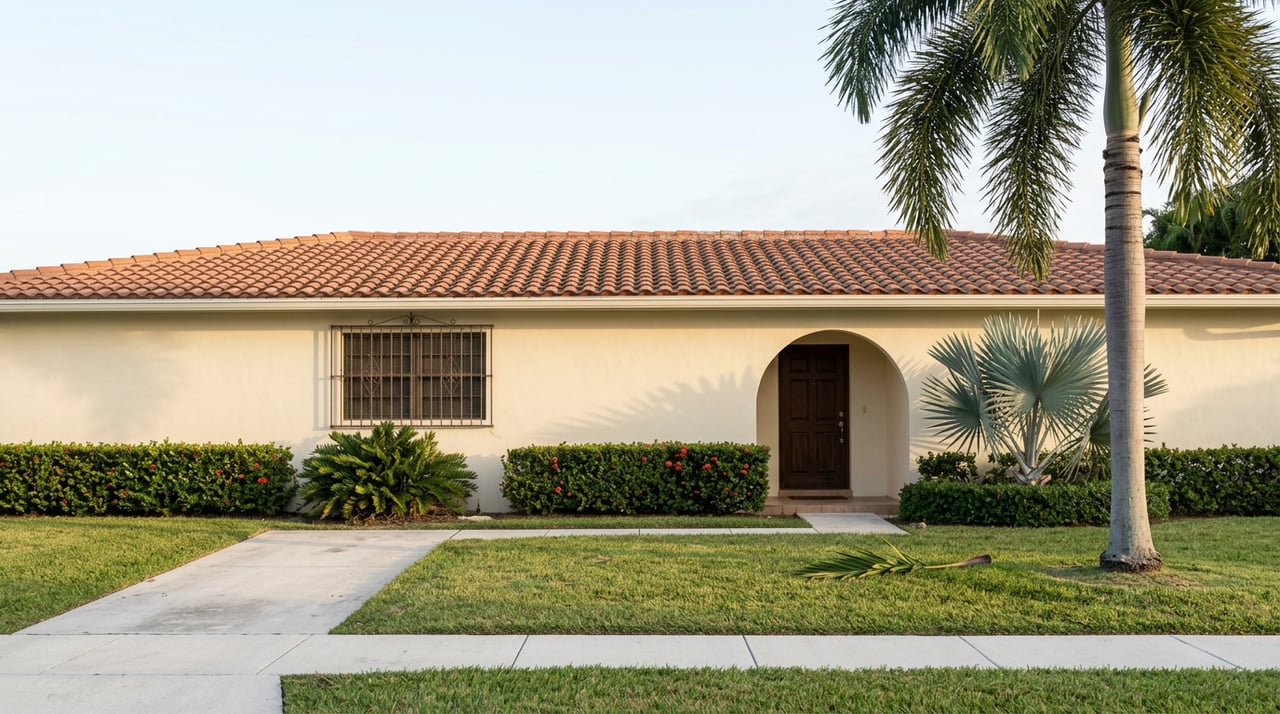
That rule has held. It's why the streets between 15th and 20th Avenue still read as a stretch of mid-century ranch homes rather than a mix of low-rise condos and corner retail. It also means there has never been a built-in path for a coffee shop, brewery, or bar to open on an interior block, no matter how much the neighborhood around it changes. If you want a night out that isn't just your own patio, you have always had to leave.
For most of Poinsettia Heights' history, leaving meant driving into downtown or Las Olas. That changed this spring. On March 4, 2026, the City of Fort Lauderdale celebrated the grand opening of the Thrive Art District at 710 NW 5th Avenue, a five-acre creative hub built out of more than 80,000 square feet of former industrial warehouse space in the Progresso corridor. Depending on which map of Poinsettia Heights you use, Progresso is either one of the smaller subdivisions folded into the neighborhood or an adjoining enclave just past its western thoroughfare. Either way, it's close enough that residents on the west side of the neighborhood can get there faster on a bike than most people can find parking downtown.
The centerpiece is Music Square, a roughly 17,000-square-foot outdoor plaza built to anchor weekend markets and concerts, with room across the district for more than 60 local businesses once leasing fills in. The city's Community Redevelopment Agency put roughly $3.9 million toward the sidewalks, lighting, and landscaping along NW 5th Avenue to make the walk there feel like part of a district rather than a detour through a warehouse block.
What actually gets people out of the house is the recurring programming. Multiple event listings for the district point to the same pattern: an Art Walk on the last Saturday of every month from 6 to 9pm, with galleries, food trucks, and live performances, and a Barks & Brews night on the third Friday that welcomes dogs. Given today's date, that puts the next Art Walk on Saturday, August 29, and the next Barks & Brews on Friday, August 21. Both are free to attend, with parking on site.
For a neighborhood whose zoning has never made room for a corner bar, having a dog-friendly happy hour show up five minutes away, on land the interior rules never touched, is the closest thing Poinsettia Heights has had to nightlife arriving at its doorstep without changing a single block of housing.
Before any of that, there's the morning routine, and it tends to run through Prospect Avenue just east of Andrews. Longtime residents point newcomers toward a small coffee shop there with maybe six or eight tables, the kind of place that has stayed exactly the same size for years while everything around it filled in. It is not on anyone's list of destination coffee, and that seems to be the appeal.
Dinner plans that don't end at Thrive tend to drift toward Eatapas off Federal Highway, a tapas spot known locally for flamenco dancers and live music on certain nights, though it's worth calling ahead if outdoor seating matters to you, since indoor is the standard setup there.
Not everything in the neighborhood points outward. On the east side, along 20th Avenue, sits Lake Melva, a landlocked body of water with no connection to the Intracoastal Waterway or any canal system. Homes along its shore get open water views that are rare for an interior Fort Lauderdale block, but the water itself goes nowhere. No boats pass through to somewhere else. It just sits there, self-contained, the one amenity in Poinsettia Heights that was never going to be shared with a neighboring city because there's nowhere for it to connect to in the first place.
That contrast says something about how this neighborhood actually operates. The things that stay entirely inside its boundaries, like Lake Melva, or the ranch homes that have lined these streets since Gill Construction Company built them, don't change and don't need to. The things that make a weekend here worth looking forward to, the boardwalk, the art walk, the dog-friendly Friday nights, all live on the other side of a line the neighborhood drew on purpose. Poinsettia Heights isn't holding itself apart from what's happening around it. It's just letting the change happen at the edges, where it always has, while the middle stays exactly as it was in 1954.
If you're weighing what a neighborhood like this actually offers day to day, beyond a listing sheet, that's the kind of texture worth understanding before you commit to a block. Jaime Cristancho works these Fort Lauderdale neighborhoods closely enough to walk you through what a street actually feels like on a Tuesday morning or a Saturday night, not just what it looks like in photos. Schedule a consultation when you're ready to talk through what fits.
Stay up to date on the latest real estate trends.

Embark on a seamless real estate journey with Jaime Cristancho. From initial consultation to closing, we’re here to listen, guide, and help you achieve success in every step of your South Florida property journey.
1209 E LAS OLAS BLVD FORT LAUDERDALE FL 33301