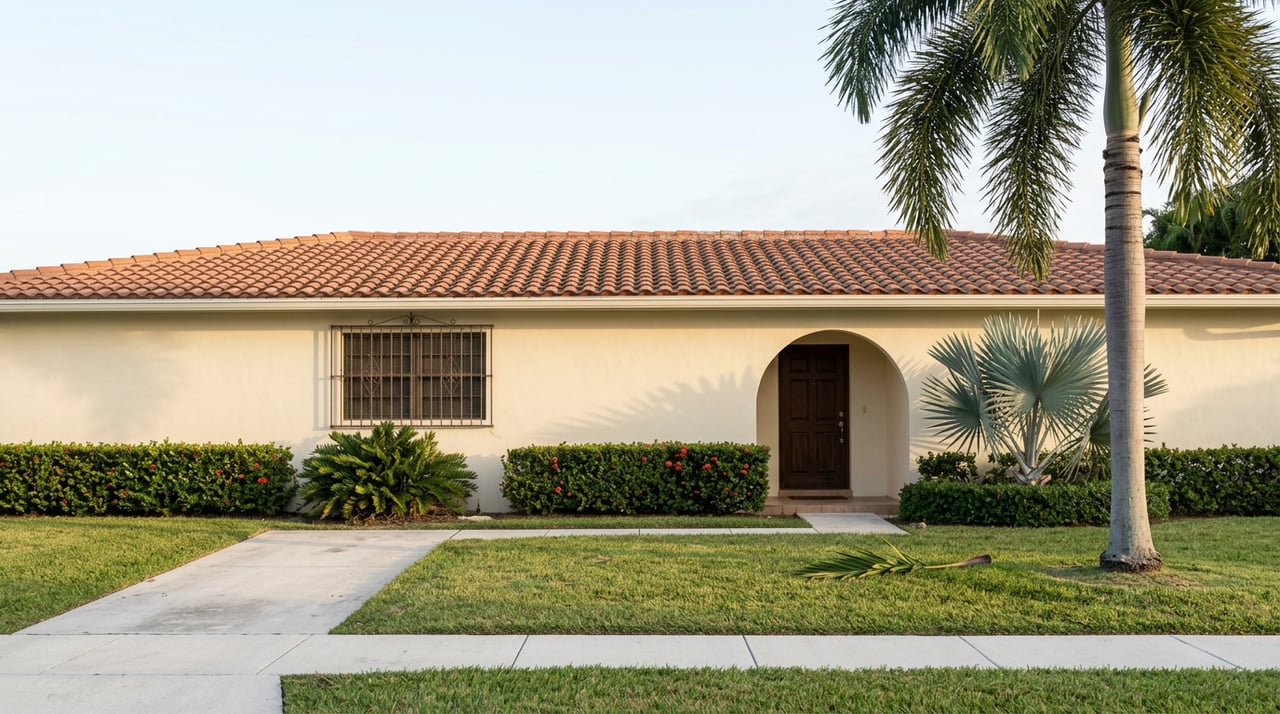
Floranada Park's New Playground Didn't Wait for Coral Ridge Isles to Ask
August 27, 2026
August 27, 2026
If you walked your dog past Floranada Park back in March, you likely saw the same equipment that's been there for years: a lit baseball diamond, a volleyball court, a picnic area, and a playground old enough that the parents using it now probably played on something similar as kids. By spring break, the city's own construction schedule called for that playground to be gone, replaced with new equipment. Whether that happened without most residents ever hearing why is the more interesting part of the story.
The renovation at this park wasn't the result of years of petitions to the city or a civic association campaign that finally paid off. It's a rounding error in a $200 million citywide bond program that's touching more than 90 parks across Fort Lauderdale. Floranada Park made the list the same way dozens of other neighborhood parks did: it was old enough, small enough, and due enough to qualify. Understanding that distinction changes how you should think about the rest of the scope still working through this park, and what it means for how infrastructure gets decided here generally.
Earlier this year, the city confirmed that new playground equipment for Floranada Park had already been manufactured and was in storage ahead of installation, with a target of getting it in the ground before Spring Break 2026. That window has since closed, which means the swap should already be behind the neighborhood by the time you're reading this. The rest of the project's scope doesn't come with the same specific date. It includes upgrades to the baseball field, improvements to the basketball and volleyball courts, and the addition of new park entrances and picnic areas, all bundled into the same bond-funded effort but without a public completion target as of this writing.
Here's what that means set against what's been there for years:
| Feature | What's been there for years | What's changing |
|---|---|---|
| Playground | Original equipment, well past its intended lifespan | New equipment, city targeted installation before Spring Break 2026 |
| Baseball field | Lighted diamond, in regular use | Field upgrades in scope, no public date yet |
| Courts | Basketball and volleyball courts | Court improvements bundled into the same project |
| Entrances | Limited access points | Additional entrances planned |
| Picnic areas | Basic picnic space | Expanded and upgraded picnic areas planned |
None of this is a teardown and rebuild. It's a park that's staying exactly where it is, with the same footprint next to Floranada Elementary, getting refreshed piece by piece as the bond program works through its list.
Fort Lauderdale voters approved a general obligation bond that put $200 million behind parks improvements across the city, and that money is being spread across more than 90 individual park projects. Floranada Park is one line item on a very long spreadsheet, not a special case the neighborhood lobbied its way into.
That matters for expectations, especially for the parts of the project still in progress. The remaining scope, the field, the courts, the entrances, the picnic areas, isn't tied to how loud Coral Ridge Isles residents have been at commission meetings. It's tied to a vendor and contractor schedule that the city is coordinating across dozens of sites simultaneously. If those pieces land later than residents expect, that's not neglect of this specific neighborhood. It's the normal friction of running a nine-figure capital program through one procurement pipeline.
Floranada Park isn't the only piece of Coral Ridge Isles infrastructure that's been reshaped from outside the neighborhood recently. The city and its contractor, David Mancini & Sons, spent much of 2024 and into 2025 replacing roughly 11,058 feet of sewer force main that runs from NE 38th Street all the way to US 1, cutting through Oakland Park, the Coral Ridge Country Club Estates neighborhood, and Coral Ridge Isles itself along NE 50th Court and NE 51st Street between NE 13th Avenue and NE 18th Avenue.
That work started in April 2024 with a target completion in fall 2025, using a mix of open-cut and trenchless construction to swap out aging cast iron pipe for new high-density polyethylene line. If you live on or near those streets and remember a stretch of construction crews and lane closures over the past couple of years, that's what it was. Like the park bond, it wasn't a Coral Ridge Isles initiative. It was one segment of a pipe replacement project that treats the neighborhood as part of a larger utility corridor, not as a standalone unit.
Put the two together and a pattern shows up. The physical infrastructure that shapes daily life here, from the ground you drive on to the park your kids play in, is mostly being decided and funded at a scale well above the neighborhood level. Coral Ridge Isles benefits from that scale. It also has almost no say in the timeline.
That's not the whole story, though. Coral Ridge Isles has no mandatory homeowners association. The roughly 1,000 homes here, split between about 400 on canals with ocean access under fixed bridges and about 600 on interior streets bounded by Commercial Boulevard, Cypress Creek Road, Dixie Highway, and NE 18th Avenue, aren't subject to architectural review boards or enforced landscaping standards. What exists instead is the Coral Ridge Isles Civic Association, and it's entirely voluntary.
Annual dues run $25, with the first year free for new homeowners. The board meets once a month, on the third Wednesday, over Zoom. The association runs a Community Dinner, keeps a recycling FAQ for residents sorting out what actually belongs in the blue cart, and organizes volunteer opportunities. It's not infrastructure oversight. It's the social layer that sits on top of a neighborhood where the big-ticket physical changes come from the city, not the block.
That division of labor is worth sitting with. The civic association is where you'd go to find out about a neighborhood cleanup or get a newsletter update on local schools. It's not where the decision to renovate Floranada Park got made, and it's not going to be where the next round of city capital projects gets decided either. If you want to influence those, the leverage point is the city's bond program engagement process, not the HOA meeting.
With the playground swap likely already behind it, the park heads into fall with new equipment and the rest of the bond scope still working its way through the pipeline. Once the field, courts, entrances, and picnic areas catch up, the practical shift is straightforward: a park that's served the neighborhood for decades gets refreshed equipment and easier access, all within walking distance of Floranada Elementary. For a neighborhood where residents on Nextdoor consistently rank their own interests as dog walking, gardening, home improvement, live music, cooking, and backyard grilling, a refreshed park adds one more low-key option to an already low-key routine. It's not going to turn Coral Ridge Isles into a destination. It was never trying to be one. It's a neighborhood built around quiet streets, canal access for those who have it, and a short drive to the beach via Commercial Boulevard, not a place engineered for foot traffic.
For anyone weighing an evening out nearby, Flanigan's Seafood Bar and Grill and Living Green Fresh Market both sit within a few miles, giving residents a couple of familiar options without needing to cross into downtown traffic.
None of this changes what Coral Ridge Isles is. It just clarifies who's actually driving the changes you'll notice this year, and it's worth knowing the difference between a neighborhood project and a city-scale one before you assume either was built with you specifically in mind.
If you're weighing a move into a canal-front home here, or you already own on NE 50th Court and want a read on how bridge clearance and canal access affect what a specific property is worth, Jaime Cristancho can walk you through the comps that actually apply to your street. Schedule a consultation when you're ready to talk specifics.
Stay up to date on the latest real estate trends.
Embark on a seamless real estate journey with Jaime Cristancho. From initial consultation to closing, we’re here to listen, guide, and help you achieve success in every step of your South Florida property journey.
1209 E LAS OLAS BLVD FORT LAUDERDALE FL 33301