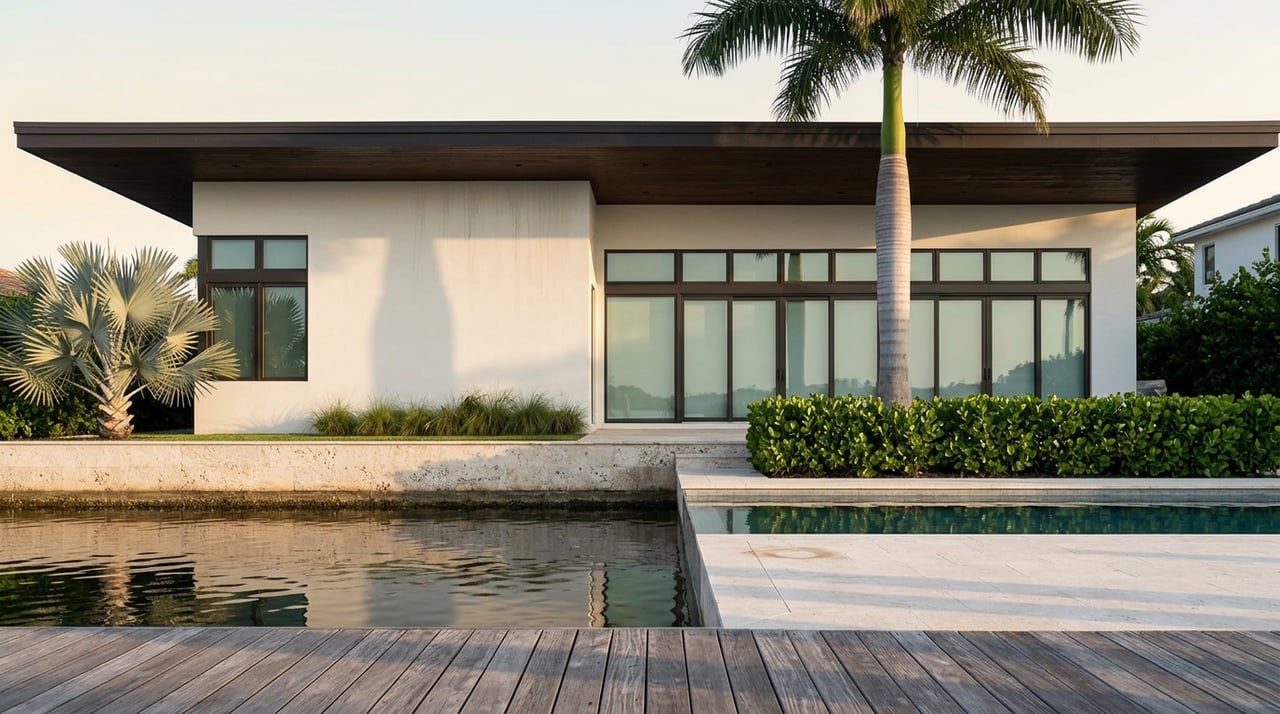
Coral Ridge Sells Water Access Without Bridges. Its Own Park Sits Behind One.
September 24, 2026
September 24, 2026
Ask anyone selling a canal-front lot in Coral Ridge Country Club what makes the address worth the number on the sign, and the pitch arrives fast: deep water, direct ocean access, no fixed bridges between the dock and the Atlantic. It's the premium buyers pay for and the reason a boat here means something different than a boat in a landlocked subdivision. The whole neighborhood's water identity rests on that promise of an open run to the ocean.
Then you get to George English Park, the 20-acre public space at Bayview Drive and Sunrise Boulevard that most Coral Ridge residents treat as the neighborhood's actual living room. It sits on the Middle River, has its own boat ramp, and gets marketed in tourism copy as a launch point for water sports. It also sits directly behind a fixed bridge with about nine feet of clearance. The same neighborhood that sells itself on bridge-free boating built its own park on the wrong side of one.
That phrase shows up again and again in listings for homes east of Bayview Drive in Coral Ridge Country Club: direct ocean access, deep-water canal, no fixed bridges to the Atlantic. It's not marketing filler. A fixed bridge caps the height of whatever you can float under it, which caps the size of boat you can practically keep, which caps what a canal-front lot is worth to a serious boater. The homes that back up to open, bridge-free water carry a real premium over the ones that don't, because the water access is functional, not decorative.
That's the context that makes the park interesting.
George English Park sits just south of the Sunrise Boulevard bridge over the Middle River, and that bridge doesn't open. One Yelp reviewer summed up the drawback plainly, noting the park is located just north of the fixed Sunrise Bridge. Local boaters clock the clearance at roughly nine feet, which is enough for kayaks, paddleboards, and most small runabouts, but not for sailboats with a mast up or for the flybridge motor yachts that Coral Ridge's other canals are built to hold.
So the park's own water access, the thing its brochures lead with, is capped the moment you try to leave through Sunrise Boulevard.
Here's roughly how that plays out by vessel type:
| Vessel | Clears the Sunrise Blvd bridge |
|---|---|
| Kayak or paddleboard | Yes |
| Jet ski | Yes |
| Small center console, top down | Usually |
| Sailboat, mast up | No |
| Flybridge motor yacht | No |
That single number does a lot of quiet work. It's why the park reads as a paddling and small-boat spot rather than a yacht launch, even though it sits on the same river system that feeds some of the most expensive dockage in Fort Lauderdale a mile away.
The park's boat ramp has four launch lanes on a concrete surface and a posted launch fee of three dollars, run by the City of Fort Lauderdale. That's real infrastructure, not an afterthought. But look at what actually uses it. The designated water ski, tubing, and wakeboard zone sits just north of the park, on the open stretch of Middle River past the bridge, which means the boats doing that kind of towing already launched from somewhere with more room to maneuver before the channel narrows.
What fills the ramp day to day is smaller and slower: kayaks, paddleboards, the occasional skiff heading out for a quiet paddle rather than a run to the inlet. Blue Moon Outdoors operates a rental kiosk right at the park, renting kayaks and paddleboards to people who never intended to leave the Middle River in the first place. The park is also the eastern put-in for the longer Middle River loop, a paddling route that runs up through Wilton Manors past Colohatchee Park and Island City Park Preserve, both of which offer their own ramps, picnic tables, and free parking for anyone extending the trip.
None of that requires clearing a bridge. It's a park built around a river, not around ocean access, and the traffic at the ramp reflects that.
If the water side of the park is quieter than the branding suggests, the land side is where Coral Ridge actually shows up. The Jimmy Evert Tennis Center, named for the longtime local coach and father of Chris Evert, runs seven lighted hard courts that stay busy well past sunset. There's a pickleball setup for the people who've made that switch, a basketball court, and a Saturday morning running group that treats the perimeter path as its regular meeting spot.
The fee structure at the tennis courts tells its own small story about who the park is really for. Residents pay three dollars. Non-residents pay four dollars fifty. It's not a large gap, but it's a deliberate one, the kind of detail that only shows up if you've actually shown up at the courts on a Saturday and paid the fee yourself.
Put the tennis center, the running group, and the pickleball courts next to the modest kayak and paddleboard traffic at the ramp, and a park that markets itself on watersports access turns out to be, for most of the people who use it weekly, a racquet and running park that happens to sit on a river.
Not every review is glowing, and the disagreement is worth naming because it's real and it's specific. The renovated playground draws consistent complaints about worn turf and drainage that leaves standing water after rain, along with the absence of swings for older kids. People who grew up with the old wooden play structures say the replacement doesn't measure up. At the same time, the same reviewers who complain about the playground often praise the tennis courts, the picnic pavilions, and the water views without reservation. It's a park that residents clearly love enough to keep showing up to and complain about in the same sentence, which is its own kind of endorsement.
The nine-foot bridge doesn't make George English Park worse. It makes it a different kind of park than its own marketing suggests, and understanding that difference is useful if you live nearby. If you keep a boat you actually take offshore, you already know the park's ramp isn't where you launch it, and the bridge is the reason. If your weekend water plans are a kayak, a paddleboard, or a slow morning on the Middle River, the park does exactly what it promises, and Blue Moon Outdoors will rent you the gear at the tiki hut by the ramp. And if your Saturday has nothing to do with water at all, the tennis center and the running group were probably the point of the park for you the whole time.
Coral Ridge's identity as a boating neighborhood is earned on the canals east of Bayview Drive, where the bridges really are absent and the water really does run straight to the Atlantic. The neighborhood's own park just happens to sit on the other side of that promise, and once you know why, the crowd you see there on a Saturday morning makes a lot more sense.
If you're weighing what a specific address in Coral Ridge actually gives you in terms of water access, dock potential, or proximity to George English Park, that's the kind of detail worth working through property by property rather than guessing from a listing photo. Jaime Cristancho works this market daily and can walk you through what a given canal, lot, or building actually delivers before you make an offer. Schedule a consultation to talk through the specifics.
Stay up to date on the latest real estate trends.

Embark on a seamless real estate journey with Jaime Cristancho. From initial consultation to closing, we’re here to listen, guide, and help you achieve success in every step of your South Florida property journey.
1209 E LAS OLAS BLVD FORT LAUDERDALE FL 33301