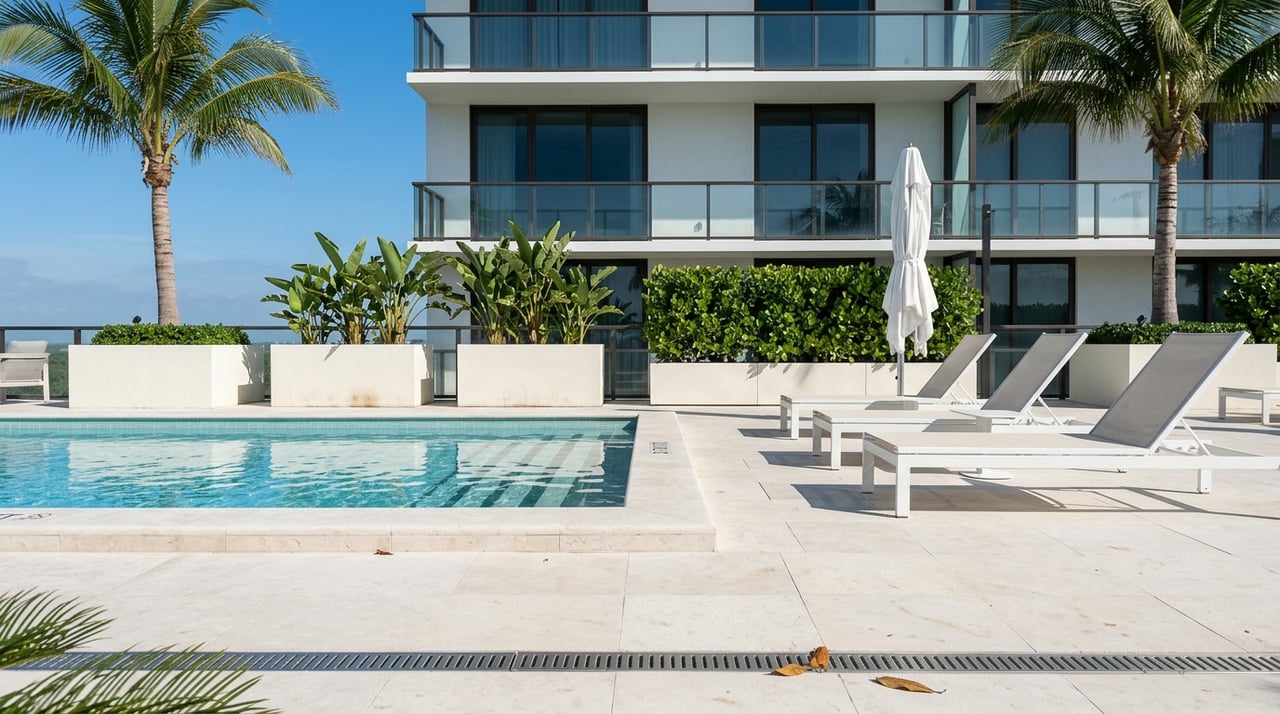
What To Know About Galt Mile Condo Fees And Amenities
June 18, 2026
June 18, 2026
If you are shopping for a condo on Galt Mile, one monthly number can change the whole picture fast: the condo fee. A lower fee may look attractive at first, while a higher fee can raise questions about value, reserves, and future costs. When you understand what those fees actually cover and how amenities vary from building to building, you can compare options with much more confidence. Let’s dive in.
Galt Mile is not a one-size-fits-all condo market. It is an oceanfront corridor with a mix of older established towers and newer luxury buildings, and that mix plays a big role in monthly fees.
Buildings on Galt Mile range from older towers like The Galleon, Regency Tower South, and Playa Del Mar to newer luxury options like L’Hermitage. Age matters because older buildings are more likely to face major upkeep for items like elevators, windows, waterproofing, roofs, and parking areas.
The type of lifestyle a building offers also affects the fee. A property with concierge-style staffing, more amenities, and a larger service team will usually carry higher monthly costs than a simpler building with fewer shared features.
In South Florida, oceanfront maintenance can also be more demanding. Insurance, labor, reserves, and building safety compliance all shape what owners pay each month.
Many buyers assume condo fees are mainly about extras like a pool or gym. In reality, Galt Mile condo fees often cover a broad package of shared expenses that can include operations, maintenance, staffing, utilities, and reserve funding.
Recent local listings show that fees commonly include items such as:
That is important because the posted number is often more than an amenity charge. It may reflect the cost of running the building, funding long-term repairs, and meeting current safety and reserve requirements.
There is also another cost buyers should separate from HOA dues. In Fort Lauderdale, stormwater is billed as a non-ad valorem assessment on the property tax bill, not as a monthly utility bill, so it should be counted separately when you estimate carrying costs.
Fee pressure is not unique to one building. Redfin reported that median HOA dues in Fort Lauderdale rose 16.2% year over year in 2024, which gives buyers a useful local benchmark when reviewing current listings.
That trend helps explain why fees can feel higher than expected, even in buildings that are not ultra-luxury. Repairs, staffing, insurance, and compliance costs have all become more important parts of the budget.
Galt Mile fees can vary widely, so it helps to compare monthly equivalents and what is included. Some buildings bill quarterly, which can make a fee look different at first glance.
These examples are representative listing samples, not neighborhood averages.
A recent listing showed about $1,055 per month in HOA dues. Amenities included a pool, clubhouse, elevator service, fitness center, hot water, and library.
The fee also included cable TV, internet, grounds maintenance, structural maintenance, roof repairs, sewer, trash, water, and security. This is a good example of an established oceanfront building where the fee supports practical shared costs as much as lifestyle perks.
A recent listing showed about $1,510 per month in HOA dues. Amenities included beach access, a fitness center, heated pool, community room, manager on site, internet, laundry, lobby, parking, and trash chute.
The fee included common areas, elevator, hot water, insurance, maintenance, pest control, reserve funds, roof repairs, security, sewer, trash, and water. For buyers, this shows how staffing, building systems, and reserve funding can meaningfully raise the monthly number.
A recent listing showed about $714 per month equivalent based on a quarterly fee. The building offered direct pool and beach access.
Other recent listings in the building described amenities such as multiple fitness centers, billiards, a clubhouse or community room, library or media center, ocean lounge, BBQ areas, doorman service, and private beach access. This is a helpful reminder that a beachfront address does not always mean the highest HOA fee.
A recent listing showed about $1,108 per month equivalent from a quarterly fee. According to the association, amenities include 24-hour security, staffed maintenance and housekeeping, deeded covered parking, cable television, free WiFi in common areas, a fitness center, sauna, pool, roof deck, and community rooms.
This is a strong example of how staffing and day-to-day building operations can shape fees just as much as visible amenities do. In older oceanfront buildings, service and upkeep are often a major part of the value.
A recent listing showed about $2,287 per month in HOA dues. Recent listing details point to a more elevated amenity profile that can include doorman service, pool, sauna, spa or hot tub, business center, beach pavilion-related features, and other resort-style services.
This is one of the clearest examples on Galt Mile of how concierge-level service and a more extensive amenity package can push fees materially higher. If you want a more full-service coastal lifestyle, a higher fee may be part of the tradeoff.
It is easy to focus on the monthly number alone, but that can be misleading. Two buildings may have similar fees and offer very different value, or one may have a lower fee today but larger future costs.
When comparing Galt Mile buildings, look at these factors together:
A building with higher fees but healthy reserves and more included utilities may be easier to budget for than one with lower dues and unresolved capital needs.
In Florida, condo fees now need to be viewed through the lens of building safety and reserve compliance. For many residential condominium buildings that are three habitable stories or higher, state law requires a structural integrity reserve study, also called a SIRS, every 10 years.
For existing unit-owner-controlled associations, the statutory deadline for completing the SIRS was set for December 31, 2025, with some flexibility if it is completed alongside a required milestone inspection due on or before December 31, 2026. The 2026 inflation-adjusted reserve threshold is $25,675.
For budgets adopted on or after December 31, 2024, an association that must obtain a SIRS generally may not vote to provide no reserves or less reserves than required for SIRS items, except in limited multicondominium situations with an approved alternative funding method. In practical terms, this is one reason many older Florida condos have raised dues or faced added assessments.
Broward County also has a building safety inspection program for buildings in existence 40 years or longer, with repeat inspections every 10 years. Since several Galt Mile towers are decades old, buyers may see both local and state requirements affecting budgets and timing.
Before you move forward on a Galt Mile condo, ask for the records that help explain both current costs and future obligations. Florida materials say association official records include current insurance policies, management agreements, accounting records, and SIRS documents.
State materials also say structural inspection reports and reserve studies must be provided to potential purchasers. If a required milestone inspection or SIRS has not been completed, the contract must disclose that fact, the buyer must receive the relevant documents more than 15 days before execution, and the buyer may void the contract within 15 days after signing and receiving the documents.
A smart due diligence review should include:
The best Galt Mile building for you is not always the one with the lowest fee. It is the one whose fee structure fits the way you want to live and the level of predictability you want in your ownership costs.
If you want a simpler oceanfront building with fewer moving parts, you may prefer a more modest amenity package and lower overhead. If you value concierge service, stronger staffing, resort-style amenities, or a more polished arrival experience, a higher monthly fee may feel justified.
The key is to understand what you are paying for before you fall in love with the view. On Galt Mile, the monthly number matters, but reserve health, included utilities, assessment history, and building condition matter just as much.
If you want help comparing Galt Mile condos with a clear eye on fees, amenities, and long-term value, connect with Jaime Cristancho. His local Fort Lauderdale insight and concierge approach can help you evaluate oceanfront options with confidence.
Stay up to date on the latest real estate trends.
Embark on a seamless real estate journey with Jaime Cristancho. From initial consultation to closing, we’re here to listen, guide, and help you achieve success in every step of your South Florida property journey.
1209 E LAS OLAS BLVD FORT LAUDERDALE FL 33301